

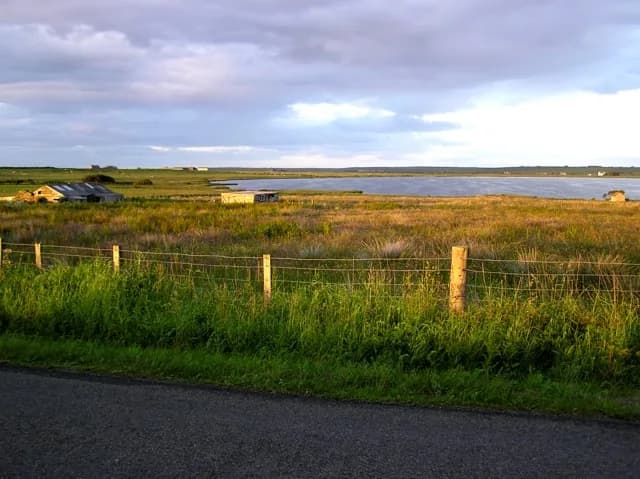
Caithness limestone loch — sister water to Watten. Shallow and fertile with excellent wild brown trout. Traditional wet-fly from boat. Good olive and sedge hatches. Smaller and more intimate than Watten.
- Loch
- Limestone
A southeasterly has held for most of a day at much the same temperature as the 12°C water. No thermal steer either way, but the drift still stacks food against the north-western end — the bank it is blowing into — so start there. This reads the upper water, though — a bottom bait at range feels it far less than a floater or a fish in the margins. Treat it as a tiebreaker between good swims rather than an override — features and angling pressure usually count for more.
With limited drift, anchor or fish static from sheltered positions. Work a bushy searching pattern on the bob and drop a contrasting nymph on the point.
If the main plan is not working, switch to a smaller, more imitative pattern fished slower and deeper. A change of drift angle can also make a difference.
Buzzer may strengthen through the middle of the day as conditions warm.
Strong wind makes boat fishing difficult — sheltered bank spots near lee shores will fish best.
Hatch predictions
Top nymph shown — see all 2 guilds as a supporter.
Start free trial14-day free trial. Cancel anytime.
Hatch predictions
Top prey shown — see all 5 as a supporter.
Start free trial14-day free trial. Cancel anytime.
Numbers are intensity 0 (none) to 3 (peak) — a guide, not a guarantee.
Still traditional loch-style, but with slightly more room for olives, upwings, lighter attractors and surface-oriented fishing when conditions suit.
A reasonable day here, though wind isn't quite in the sweet spot.
Caithness limestone loch — sister water to Watten. Shallow and fertile with excellent wild brown trout. Traditional wet-fly from boat. Good olive and sedge hatches. Smaller and more intimate than Watten.
SEPA (Scotland) · UKSC100014
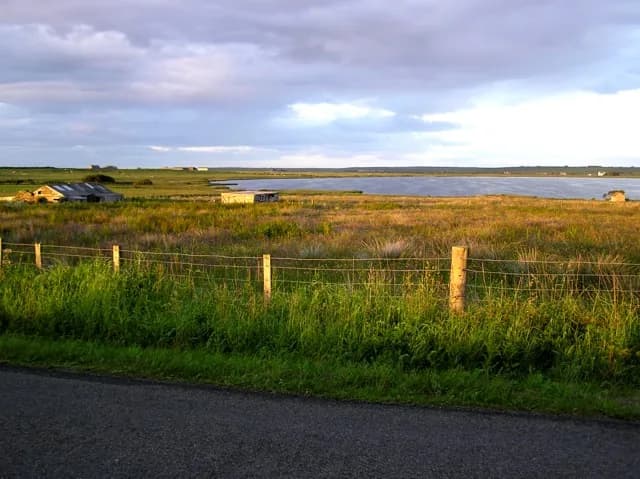
Caithness limestone loch — sister water to Watten.
A southeasterly has held for most of a day at much the same temperature as the 12°C water. No thermal steer either way, but the drift still stacks food against the north-western end — the bank it is blowing into — so start there. This reads the upper water, though — a bottom bait at range feels it far less than a floater or a fish in the margins. Treat it as a tiebreaker between good swims rather than an override — features and angling pressure usually count for more.
With limited drift, anchor or fish static from sheltered positions. Work a bushy searching pattern on the bob and drop a contrasting nymph on the point.
If the main plan is not working, switch to a smaller, more imitative pattern fished slower and deeper. A change of drift angle can also make a difference.
Buzzer may strengthen through the middle of the day as conditions warm.
Strong wind makes boat fishing difficult — sheltered bank spots near lee shores will fish best.
Hatch predictions
Top nymph shown — see all 2 guilds as a supporter.
Start free trial14-day free trial. Cancel anytime.
Hatch predictions
Top prey shown — see all 5 as a supporter.
Start free trial14-day free trial. Cancel anytime.
Numbers are intensity 0 (none) to 3 (peak) — a guide, not a guarantee.
Still traditional loch-style, but with slightly more room for olives, upwings, lighter attractors and surface-oriented fishing when conditions suit.
A reasonable day here, though wind isn't quite in the sweet spot.
Caithness limestone loch — sister water to Watten. Shallow and fertile with excellent wild brown trout. Traditional wet-fly from boat. Good olive and sedge hatches. Smaller and more intimate than Watten.
SEPA (Scotland) · UKSC100014