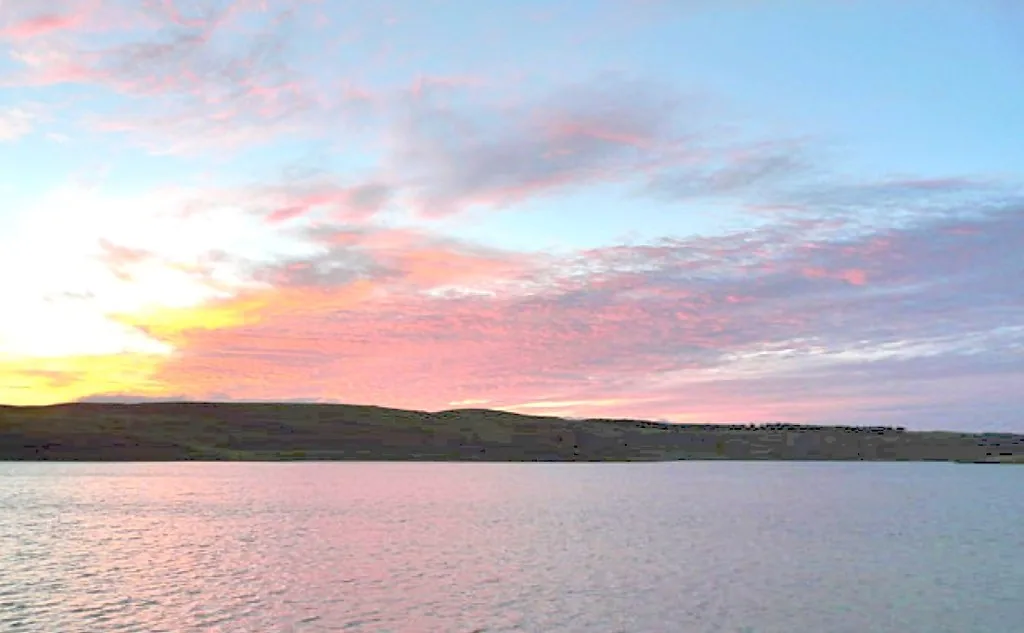


Durness and Assynt limestone lochs — some of Scotland's clearest waters, where you can see fish rise from 20 feet away. The trout here are exceptional pound-for-pound — small fish but hard-fighting, cruising the shallow water in search of shrimp and snails. Remote and rarely pressured means fish have time to think. Fishing here rewards stillness and observation; read the water, locate the fish, and present with precision. The landscape is utterly unique — limestone hills and white-sand beaches. The kind of place where time moves differently.
- Free fishing
- Fly only
A respectable few hours, if you choose your moments
Good wave on — drift country. A useful wave. Work the productive shore.
This venue is often best in spring through autumn.
Conditions on the water
Some readings unavailable — check directly before fishing.
The brief
The plan
Set up a broadside drift and cover the water systematically. Work Invicta on the bob and Greenwell's Glory on the point.
If the main plan is not working, switch to a smaller, more imitative pattern fished slower and deeper. A change of drift angle can also make a difference.
Keep an eye on changing conditions — wind shifts and cloud breaks can trigger short feeding spells.
A gentle ripple is ideal for drifting — broadside drift covering the wind lanes should be productive.
What's on, when
Numbers are intensity 0 (none) to 3 (peak) — a guide, not a guarantee.
Top pattern + the box
Why today scores what it does
- Wind conditions (ripple) closely match what this water fishes best in.
Precipitation
Who this water suits
Far North Limestone Lochs, on the water
Field guide · contributor-editedWhat this water is
Durness and Assynt limestone lochs — some of Scotland's clearest waters, where you can see fish rise from 20 feet away. The trout here are exceptional pound-for-pound — small fish but hard-fighting, cruising the shallow water in search of shrimp and snails. Remote and rarely pressured means fish have time to think. Fishing here rewards stillness and observation; read the water, locate the fish, and present with precision. The landscape is utterly unique — limestone hills and white-sand beaches. The kind of place where time moves differently.
- Loch
- Limestone
How to get to the water
Where the rules change
- Trout15 March → 6 October
Far North Limestone Lochs
Durness and Assynt limestone lochs — some of Scotland's clearest waters, where you can see fish rise from 20 feet away.
A respectable few hours, if you choose your moments
Good wave on — drift country. A useful wave. Work the productive shore.
This venue is often best in spring through autumn.
Some readings unavailable — check directly before fishing.
A good match for this venue — most conditions are close to what it fishes best in.
Set up a broadside drift and cover the water systematically. Work Invicta on the bob and Greenwell's Glory on the point.
If the main plan is not working, switch to a smaller, more imitative pattern fished slower and deeper. A change of drift angle can also make a difference.
Keep an eye on changing conditions — wind shifts and cloud breaks can trigger short feeding spells.
A gentle ripple is ideal for drifting — broadside drift covering the wind lanes should be productive.
- Wind conditions (ripple) closely match what this water fishes best in.
Numbers are intensity 0 (none) to 3 (peak) — a guide, not a guarantee.
Durness and Assynt limestone lochs — some of Scotland's clearest waters, where you can see fish rise from 20 feet away. The trout here are exceptional pound-for-pound — small fish but hard-fighting, cruising the shallow water in search of shrimp and snails. Remote and rarely pressured means fish have time to think. Fishing here rewards stillness and observation; read the water, locate the fish, and present with precision. The landscape is utterly unique — limestone hills and white-sand beaches. The kind of place where time moves differently.
- Loch
- Limestone
- Trout15 March → 6 October
Durness and Assynt limestone lochs — some of Scotland's clearest waters, where you can see fish rise from 20 feet away. The trout here are exceptional pound-for-pound — small fish but hard-fighting, cruising the shallow water in search of shrimp and snails. Remote and rarely pressured means fish have time to think. Fishing here rewards stillness and observation; read the water, locate the fish, and present with precision. The landscape is utterly unique — limestone hills and white-sand beaches. The kind of place where time moves differently.