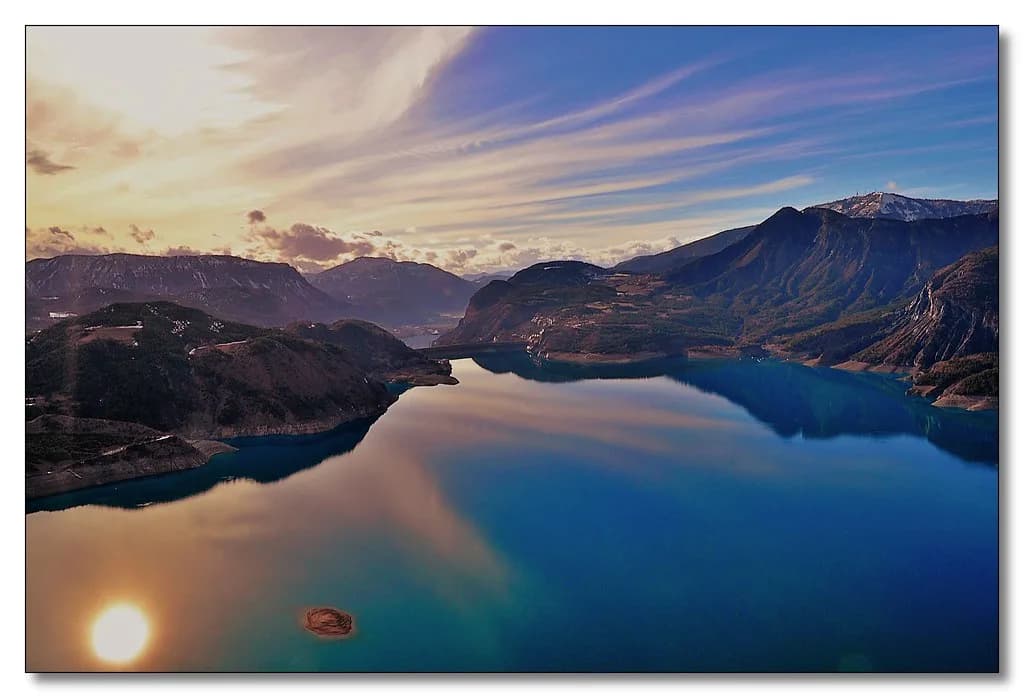

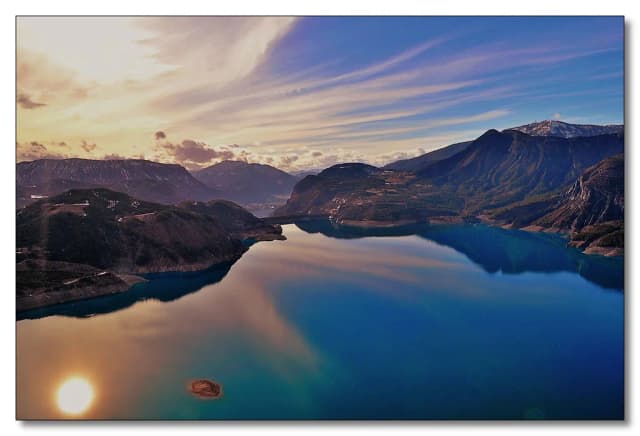
Serre-Ponçon is the great Durance reservoir — 2,800 hectares of mountain-held water in a setting so good it is almost embarrassing to admit you are there for the fish. It is a mixed fishery in the fullest sense: wild trout in the feeder streams at the head of the lake, perch and pike along the drowned willow edges, pike-perch out in the deeps, and the occasional large brown that has grown up on a diet of whatever else swims in here. Fly fishers come for the pike — large flies, floating line, patient probing of the drop-offs — and for the first and last light hour when the trout move onto the shallow margins at the Savines end. The water level drops sharply through summer for irrigation release, which exposes and reshapes the banks faster than any fishery has a right to expect, so take local advice on what is currently reachable. Absurdly scenic; genuine quarry.
- Public aappma day ticket
Good late spring conditions for Lac de Serre-Ponçon
Good wave on — drift country. A useful wave. Work the productive shore.
Conditions are not ideal but fishable at Lac de Serre-Ponçon. The ripple should help fish move and feed more confidently.
Conditions on the water
Some readings unavailable — check directly before fishing.
The brief
The plan
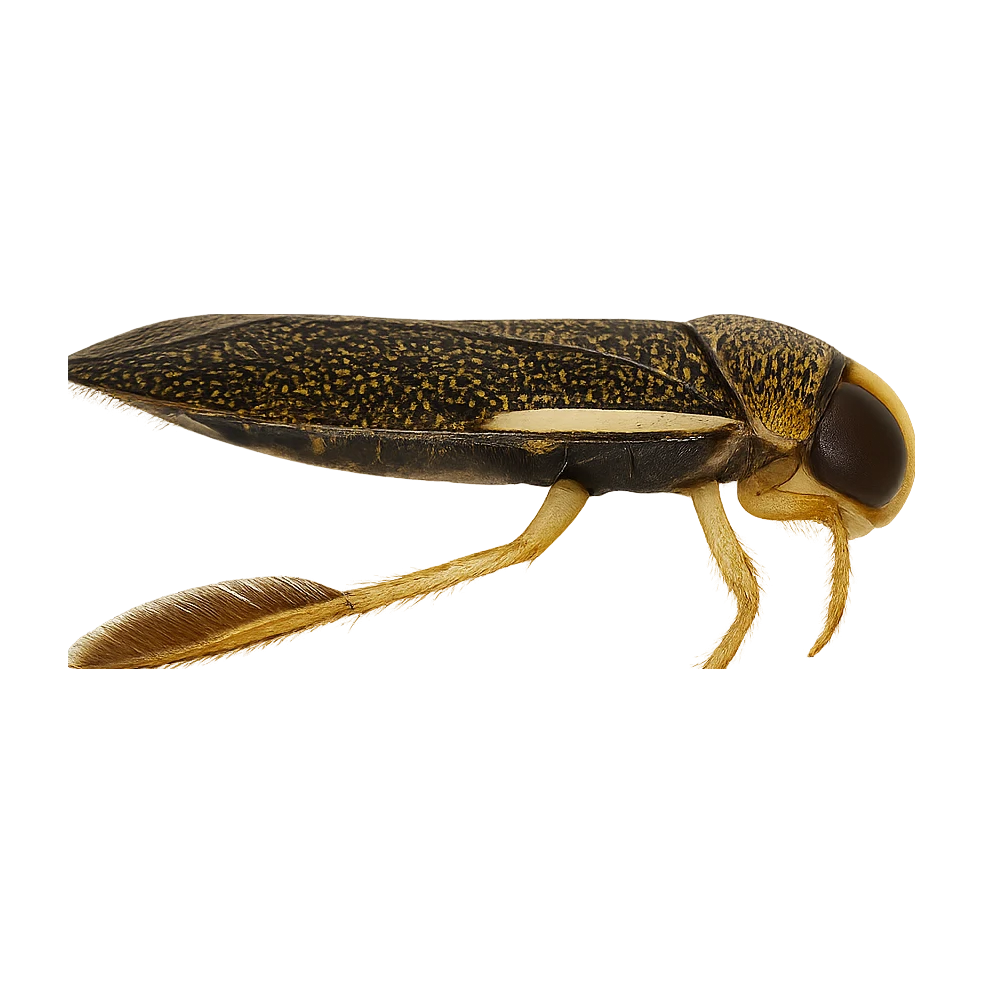
Start with Buzzer (14-16) on a slow figure-of-eight or hang under indicator. If that does not produce, switch depth or speed before changing the pattern entirely. When no hatch is visible, a buzzer team — black stripped quill on the point, attractor or pearl-rib on the top dropper — is the default starting point on any UK stillwater.
If fish refuse on top, drop to a buzzer under an indicator at different depths.
Keep an eye on changing conditions — wind shifts and cloud breaks can trigger short feeding spells.
Good ripple suits both bank and boat. Bank: work inflows, dam walls, and points. Boat: broadside drift covering wind lanes.
What's on, when
Numbers are intensity 0 (none) to 3 (peak) — a guide, not a guarantee.
Top pattern + the box
Why today scores what it does
- Wind conditions (ripple) closely match what this water fishes best in.
Precipitation
Who this water suits
Lac de Serre-Ponçon, on the water
Field guide · contributor-editedWhat this water is
Serre-Ponçon is the great Durance reservoir — 2,800 hectares of mountain-held water in a setting so good it is almost embarrassing to admit you are there for the fish. It is a mixed fishery in the fullest sense: wild trout in the feeder streams at the head of the lake, perch and pike along the drowned willow edges, pike-perch out in the deeps, and the occasional large brown that has grown up on a diet of whatever else swims in here. Fly fishers come for the pike — large flies, floating line, patient probing of the drop-offs — and for the first and last light hour when the trout move onto the shallow margins at the Savines end. The water level drops sharply through summer for irrigation release, which exposes and reshapes the banks faster than any fishery has a right to expect, so take local advice on what is currently reachable. Absurdly scenic; genuine quarry.
- Reservoir
- Alluvial
How to get to the water
Where the rules change
- TroutLast Saturday of January → End of December
Licences, sorteo, the rules
- AAPPMA Hautes-Alpes
- Pike season closed end-January to end-April
- Boat access from Savines-le-Lac and Chorges
- Water level varies dramatically through summer.
Lac de Serre-Ponçon
Serre-Ponçon is the great Durance reservoir — 2,800 hectares of mountain-held water in a setting so good it is almost embarrassing to admit you are there for the fish.
Good late spring conditions for Lac de Serre-Ponçon
Good wave on — drift country. A useful wave. Work the productive shore.
Conditions are not ideal but fishable at Lac de Serre-Ponçon. The ripple should help fish move and feed more confidently.
Some readings unavailable — check directly before fishing.
A reasonable day here, though cloud isn't quite in the sweet spot.
Start with Buzzer (14-16) on a slow figure-of-eight or hang under indicator. If that does not produce, switch depth or speed before changing the pattern entirely. When no hatch is visible, a buzzer team — black stripped quill on the point, attractor or pearl-rib on the top dropper — is the default starting point on any UK stillwater.
If fish refuse on top, drop to a buzzer under an indicator at different depths.
Keep an eye on changing conditions — wind shifts and cloud breaks can trigger short feeding spells.
Good ripple suits both bank and boat. Bank: work inflows, dam walls, and points. Boat: broadside drift covering wind lanes.
- Wind conditions (ripple) closely match what this water fishes best in.
Numbers are intensity 0 (none) to 3 (peak) — a guide, not a guarantee.
Terrain map
- AAPPMA Hautes-Alpes
- Pike season closed end-January to end-April
- Boat access from Savines-le-Lac and Chorges
- Water level varies dramatically through summer.
Serre-Ponçon is the great Durance reservoir — 2,800 hectares of mountain-held water in a setting so good it is almost embarrassing to admit you are there for the fish. It is a mixed fishery in the fullest sense: wild trout in the feeder streams at the head of the lake, perch and pike along the drowned willow edges, pike-perch out in the deeps, and the occasional large brown that has grown up on a diet of whatever else swims in here. Fly fishers come for the pike — large flies, floating line, patient probing of the drop-offs — and for the first and last light hour when the trout move onto the shallow margins at the Savines end. The water level drops sharply through summer for irrigation release, which exposes and reshapes the banks faster than any fishery has a right to expect, so take local advice on what is currently reachable. Absurdly scenic; genuine quarry.
- Reservoir
- Alluvial
- TroutLast Saturday of January → End of December
Serre-Ponçon is the great Durance reservoir — 2,800 hectares of mountain-held water in a setting so good it is almost embarrassing to admit you are there for the fish. It is a mixed fishery in the fullest sense: wild trout in the feeder streams at the head of the lake, perch and pike along the drowned willow edges, pike-perch out in the deeps, and the occasional large brown that has grown up on a diet of whatever else swims in here. Fly fishers come for the pike — large flies, floating line, patient probing of the drop-offs — and for the first and last light hour when the trout move onto the shallow margins at the Savines end. The water level drops sharply through summer for irrigation release, which exposes and reshapes the banks faster than any fishery has a right to expect, so take local advice on what is currently reachable. Absurdly scenic; genuine quarry.