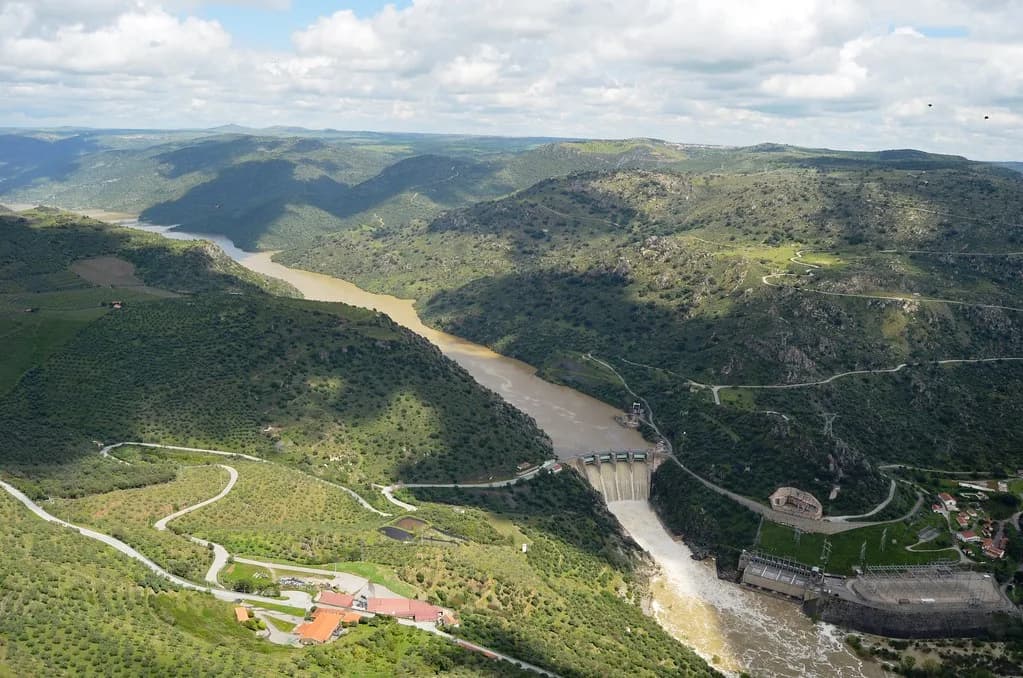


The next great step down the Duero from Aldeadávila, still inside the Arribes del Duero gorge on the international border. Like its upstream neighbour it is a deep hydroelectric canyon reservoir rather than a gentle stillwater — granite walls, cold clear depths, and a fish community led by zander, wels catfish and pike, with barbel on the shallower margins and around the Águeda and other tributary mouths. It is slightly less sheer than Aldeadávila in places, which opens up a little more fishable bank, but the character is the same: a predator water best approached with a boat, big flies, and modest expectations of numbers in exchange for the chance of a serious fish.
Summer pike — dawn and dusk topwater
Good wave on — drift country. Drift fishing weather — three flies on a long leader.
Pike are ambush-feeding from weed cover. Fry and small perch concentrate in the warm shallows, drawing pike in during low-light periods. Mid-day pike retreat to deeper weed channels.
Live now
Conditions on the water
Trends shown where the gauge supports them
Some readings unavailable — check directly before fishing.
How to fish · for pike
The brief
When · where · method · kit
Today's tactical plan
The plan
Plan A · Plan B · what to watch · bank or boat
Summer pike on the fly. Fish early (first light) and late (last hour) when pike push shallow to feed. Topwater is king — poppers and gurglers over weed beds. Mid-day fish hold deep in weed channels. Take a break during the heat of the day. Use a 9-10wt rod with a stiff butt for turning big fish away from weed.
If the main plan is not working, switch to a smaller, more imitative pattern fished slower and deeper. A change of drift angle can also make a difference.
Evening tends to be the best period in summer — stay late if you can for a sedge or spinner fall.
A gentle ripple is ideal for drifting — broadside drift covering the wind lanes should be productive.
Hatches & runs
What's on, when
Twelve months at a glance
Numbers are intensity 0 (none) to 3 (peak) — a guide, not a guarantee.
Today's fly · curated pack
Top pattern + the box
5 patterns from this venue's curated pack
Evidence
Why today scores what it does
The factors driving today's verdict
- Cloud cover (mixed) suits the fishery well.
- Reservoir near full — settled fish across plenty of holding water.
Embalse de Saucelle · profile
Who this water suits
Strengths · watch-outs · best for
Embalse de Saucelle, on the water
Field guide · contributor-editedEmbalse de Saucelle · about
What this water is
Background · character · contributors
The next great step down the Duero from Aldeadávila, still inside the Arribes del Duero gorge on the international border. Like its upstream neighbour it is a deep hydroelectric canyon reservoir rather than a gentle stillwater — granite walls, cold clear depths, and a fish community led by zander, wels catfish and pike, with barbel on the shallower margins and around the Águeda and other tributary mouths. It is slightly less sheer than Aldeadávila in places, which opens up a little more fishable bank, but the character is the same: a predator water best approached with a boat, big flies, and modest expectations of numbers in exchange for the chance of a serious fish.
- Reservoir
- Granite
Embalse de Saucelle · directions
How to get to the water
Embalse de Saucelle · permits
Good to know
- Castilla y León licence (Confederación Hidrográfica del Duero); Spanish/Portuguese border water — fish the Spanish bank under Spanish rules
- Barbel protected during spawning
- Zander and wels catfish are invasive with specific handling rules — check current Duero-basin regulations.
Embalse de Saucelle
The next great step down the Duero from Aldeadávila, still inside the Arribes del Duero gorge on the international border.
Summer pike — dawn and dusk topwater
Good wave on — drift country. Drift fishing weather — three flies on a long leader.
Pike are ambush-feeding from weed cover. Fry and small perch concentrate in the warm shallows, drawing pike in during low-light periods. Mid-day pike retreat to deeper weed channels.
Some readings unavailable — check directly before fishing.
A good match for this venue — most conditions are close to what it fishes best in.
Summer pike on the fly. Fish early (first light) and late (last hour) when pike push shallow to feed. Topwater is king — poppers and gurglers over weed beds. Mid-day fish hold deep in weed channels. Take a break during the heat of the day. Use a 9-10wt rod with a stiff butt for turning big fish away from weed.
If the main plan is not working, switch to a smaller, more imitative pattern fished slower and deeper. A change of drift angle can also make a difference.
Evening tends to be the best period in summer — stay late if you can for a sedge or spinner fall.
A gentle ripple is ideal for drifting — broadside drift covering the wind lanes should be productive.
- Cloud cover (mixed) suits the fishery well.
- Reservoir near full — settled fish across plenty of holding water.
Numbers are intensity 0 (none) to 3 (peak) — a guide, not a guarantee.
- Castilla y León licence (Confederación Hidrográfica del Duero); Spanish/Portuguese border water — fish the Spanish bank under Spanish rules
- Barbel protected during spawning
- Zander and wels catfish are invasive with specific handling rules — check current Duero-basin regulations.
The next great step down the Duero from Aldeadávila, still inside the Arribes del Duero gorge on the international border. Like its upstream neighbour it is a deep hydroelectric canyon reservoir rather than a gentle stillwater — granite walls, cold clear depths, and a fish community led by zander, wels catfish and pike, with barbel on the shallower margins and around the Águeda and other tributary mouths. It is slightly less sheer than Aldeadávila in places, which opens up a little more fishable bank, but the character is the same: a predator water best approached with a boat, big flies, and modest expectations of numbers in exchange for the chance of a serious fish.
- Reservoir
- Granite
The next great step down the Duero from Aldeadávila, still inside the Arribes del Duero gorge on the international border. Like its upstream neighbour it is a deep hydroelectric canyon reservoir rather than a gentle stillwater — granite walls, cold clear depths, and a fish community led by zander, wels catfish and pike, with barbel on the shallower margins and around the Águeda and other tributary mouths. It is slightly less sheer than Aldeadávila in places, which opens up a little more fishable bank, but the character is the same: a predator water best approached with a boat, big flies, and modest expectations of numbers in exchange for the chance of a serious fish.