

Landlocked salmon, brown trout, and char in water that reaches 95 metres deep. Accessible from Jyväskylä, it offers both bank and boat fishing. The sheer scale and the cold depths create a sense of water wilderness.
- Lake
- Granite
A southwesterly has held for 6 hours, running colder than the water (1°C air against 3°C water). The end it blows into is taking that chilled surface water, so try the sheltered south-western end instead — off the back of the wind, where the undertow returns food along the bottom. That chill sits in the top of the water, though, and the bed is slower to feel it — on a bottom bait it is the undertow, not the temperature, that puts you at this end. Treat it as a tiebreaker between good swims rather than an override — features and angling pressure usually count for more.
Work a bushy searching pattern on the bob and drop a contrasting nymph on the point.
If the main plan is not working, switch to a smaller, more imitative pattern fished slower and deeper. A change of drift angle can also make a difference.
Keep an eye on changing conditions — wind shifts and cloud breaks can trigger short feeding spells.
A gentle ripple is ideal for drifting — broadside drift covering the wind lanes should be productive.
Hatch predictions
Top prey shown — see all 3 as a supporter.
Start free trial14-day free trial. Cancel anytime.
Numbers are intensity 0 (none) to 3 (peak) — a guide, not a guarantee.
A reasonable day here, though cloud isn't quite in the sweet spot.
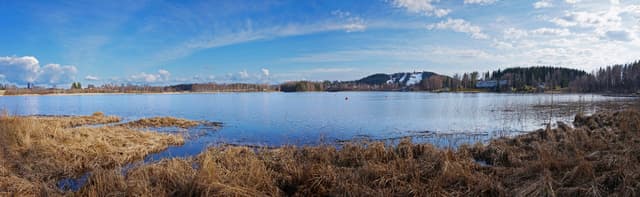
Landlocked salmon, brown trout, and char in water that reaches 95 metres deep. Accessible from Jyväskylä, it offers both bank and boat fishing. The sheer scale and the cold depths create a sense of water wilderness.
WFD classification · FI14_261_Y01
Lake Päijänne's Arctic char follow Finland's lake-specific byelaw. Spawning protection typically runs mid-September through November; exact dates vary by lake sub-area. Confirm with your fishing permit or local association — some char waters may have extensions or restrictions.
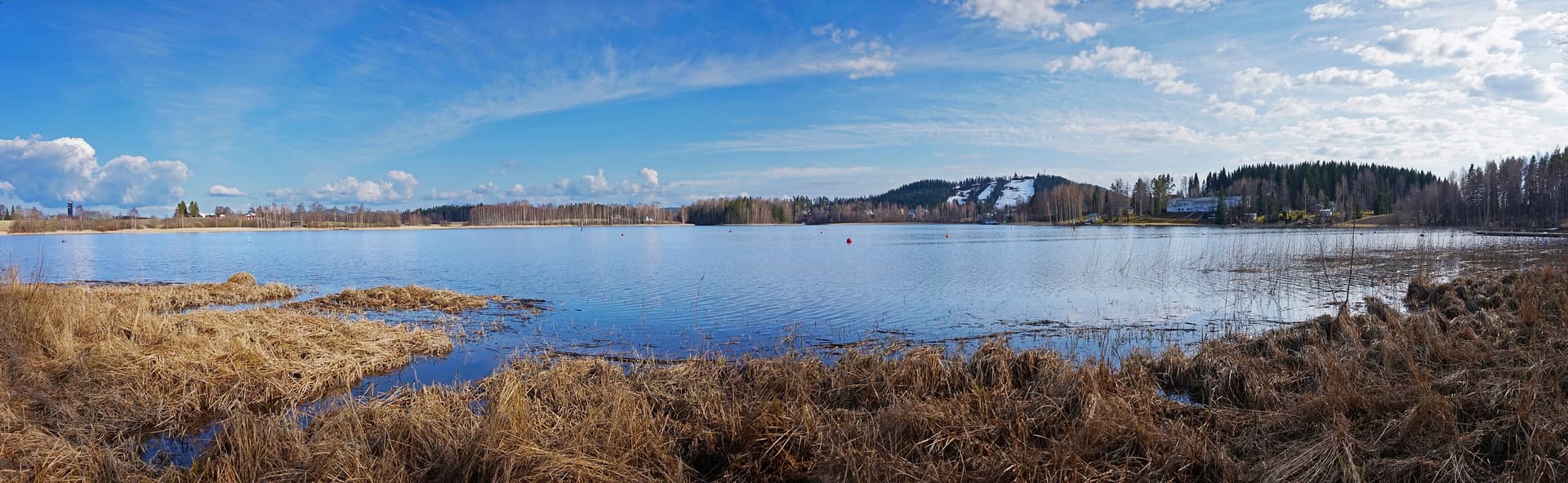
Finland's second-largest lake stretches long and narrow for 120 kilometres through central Finland.
A southwesterly has held for 6 hours, running colder than the water (1°C air against 3°C water). The end it blows into is taking that chilled surface water, so try the sheltered south-western end instead — off the back of the wind, where the undertow returns food along the bottom. That chill sits in the top of the water, though, and the bed is slower to feel it — on a bottom bait it is the undertow, not the temperature, that puts you at this end. Treat it as a tiebreaker between good swims rather than an override — features and angling pressure usually count for more.
Work a bushy searching pattern on the bob and drop a contrasting nymph on the point.
If the main plan is not working, switch to a smaller, more imitative pattern fished slower and deeper. A change of drift angle can also make a difference.
Keep an eye on changing conditions — wind shifts and cloud breaks can trigger short feeding spells.
A gentle ripple is ideal for drifting — broadside drift covering the wind lanes should be productive.
Hatch predictions
Top prey shown — see all 3 as a supporter.
Start free trial14-day free trial. Cancel anytime.
Numbers are intensity 0 (none) to 3 (peak) — a guide, not a guarantee.
A reasonable day here, though cloud isn't quite in the sweet spot.
Landlocked salmon, brown trout, and char in water that reaches 95 metres deep. Accessible from Jyväskylä, it offers both bank and boat fishing. The sheer scale and the cold depths create a sense of water wilderness.
WFD classification · FI14_261_Y01
Lake Päijänne's Arctic char follow Finland's lake-specific byelaw. Spawning protection typically runs mid-September through November; exact dates vary by lake sub-area. Confirm with your fishing permit or local association — some char waters may have extensions or restrictions.
Lake Päijänne is a lake in Central Finland / Jyväskylä. Its recorded elevation is about 88 m above sea level and the catchment geology is granite. Our data lists brown trout and char here. The char season is recorded as running from 1 June to 31 October. Best window recorded for anglers: June–September (best July–August, midnight sun). Core methods listed: Wet fly; Stripping; Nymph. Its Water Framework Directive ecological status is recorded as good.