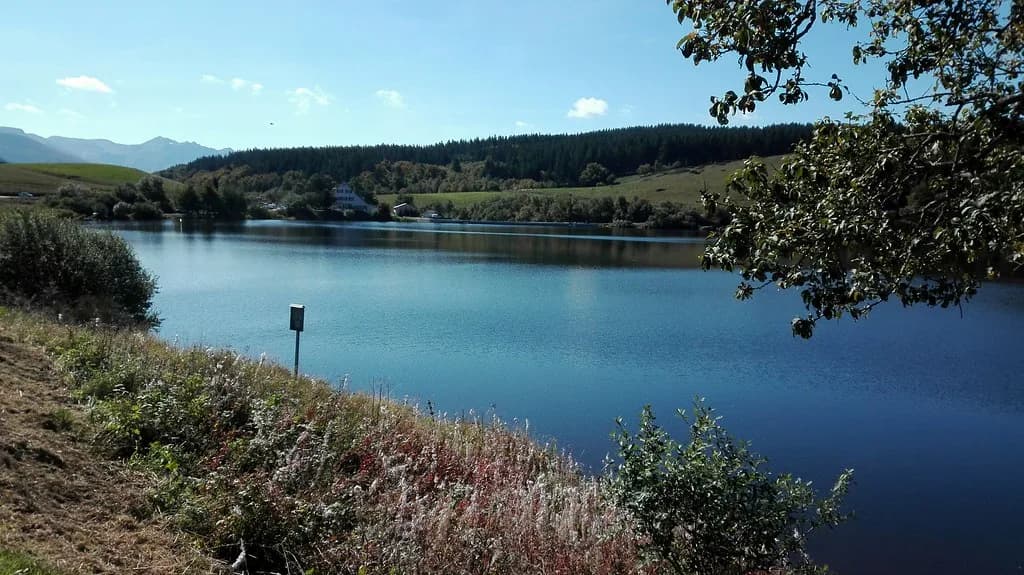

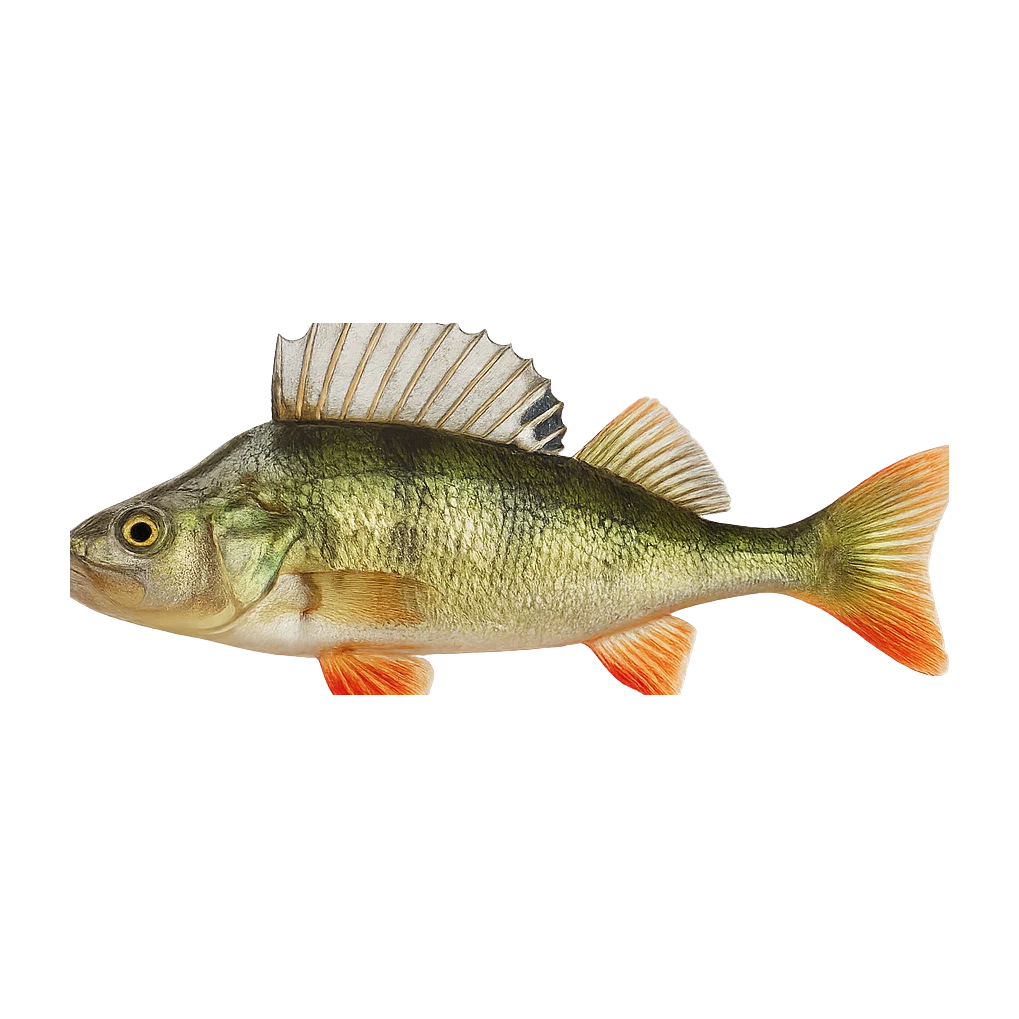
Lac de Guéry sits under the Sancy massif at about 1240 metres — the highest natural lake in the Puy-de-Dôme, volcanic from its bedrock up, and the sort of water that makes you glad you packed a jumper even in July. Wild and stocked brown trout share it, and the fishing is straightforward in the best sense: float-tube from the middle, or work the inlet bays on foot with a fast-sinking line and a leech or a small streamer. The surrounding landscape is all volcanic peaks and high pasture, which means wind is not optional — learn to use it rather than fight it. The season is officially 2ème catégorie but realistically early May through September is when anything serious happens. Permits are on the inter-federal card so day tickets are easy enough. A proper Massif Central water — not quite as famous as Pavin, but more fishable, and better suited to a day you want to cover some water.
- Day tickets
Good drifting conditions on Lac Guéry
Good wave on — drift country. A useful wave. Work the productive shore.
No strong hatch signals at the moment — general searching tactics should work best. The ripple is helpful — fish should move onto the feed and a slow-drifted team or single wet will cover water well.
This venue is often best in spring through autumn.
Conditions on the water
Some readings unavailable — check directly before fishing.
The brief
The plan
Set up a broadside drift and cover the water systematically. Work a bushy searching pattern on the bob and drop a contrasting nymph on the point.
If the main plan is not working, switch to a smaller, more imitative pattern fished slower and deeper. A change of drift angle can also make a difference.
Keep an eye on changing conditions — wind shifts and cloud breaks can trigger short feeding spells.
A gentle ripple is ideal for drifting — broadside drift covering the wind lanes should be productive.
What's on, when
Numbers are intensity 0 (none) to 3 (peak) — a guide, not a guarantee.
Top pattern + the box
Why today scores what it does
- Wind conditions (ripple) closely match what this water fishes best in.
- Cloud cover (cloud) suits the fishery well.
Precipitation
Who this water suits
Lac Guéry, on the water
Field guide · contributor-editedWhat this water is
Lac de Guéry sits under the Sancy massif at about 1240 metres — the highest natural lake in the Puy-de-Dôme, volcanic from its bedrock up, and the sort of water that makes you glad you packed a jumper even in July. Wild and stocked brown trout share it, and the fishing is straightforward in the best sense: float-tube from the middle, or work the inlet bays on foot with a fast-sinking line and a leech or a small streamer. The surrounding landscape is all volcanic peaks and high pasture, which means wind is not optional — learn to use it rather than fight it. The season is officially 2ème catégorie but realistically early May through September is when anything serious happens. Permits are on the inter-federal card so day tickets are easy enough. A proper Massif Central water — not quite as famous as Pavin, but more fishable, and better suited to a day you want to cover some water.
- Lake
- Granite
How to get to the water
Where the rules change
- Trout2nd Saturday of March → 3rd Sunday of September
Licences, sorteo, the rules
- AAPPMA permits.
Lac Guéry
Lac de Guéry sits under the Sancy massif at about 1240 metres — the highest natural lake in the Puy-de-Dôme, volcanic from its bedrock up, and the sort of water that makes you glad you packed a jumper even in July.
Good drifting conditions on Lac Guéry
Good wave on — drift country. A useful wave. Work the productive shore.
No strong hatch signals at the moment — general searching tactics should work best. The ripple is helpful — fish should move onto the feed and a slow-drifted team or single wet will cover water well.
This venue is often best in spring through autumn.
Some readings unavailable — check directly before fishing.
Conditions are ideal for Lac Guéry — wind, cloud and temperature all line up.
Set up a broadside drift and cover the water systematically. Work a bushy searching pattern on the bob and drop a contrasting nymph on the point.
If the main plan is not working, switch to a smaller, more imitative pattern fished slower and deeper. A change of drift angle can also make a difference.
Keep an eye on changing conditions — wind shifts and cloud breaks can trigger short feeding spells.
A gentle ripple is ideal for drifting — broadside drift covering the wind lanes should be productive.
- Wind conditions (ripple) closely match what this water fishes best in.
- Cloud cover (cloud) suits the fishery well.
Numbers are intensity 0 (none) to 3 (peak) — a guide, not a guarantee.
- AAPPMA permits.
Lac de Guéry sits under the Sancy massif at about 1240 metres — the highest natural lake in the Puy-de-Dôme, volcanic from its bedrock up, and the sort of water that makes you glad you packed a jumper even in July. Wild and stocked brown trout share it, and the fishing is straightforward in the best sense: float-tube from the middle, or work the inlet bays on foot with a fast-sinking line and a leech or a small streamer. The surrounding landscape is all volcanic peaks and high pasture, which means wind is not optional — learn to use it rather than fight it. The season is officially 2ème catégorie but realistically early May through September is when anything serious happens. Permits are on the inter-federal card so day tickets are easy enough. A proper Massif Central water — not quite as famous as Pavin, but more fishable, and better suited to a day you want to cover some water.
- Lake
- Granite
- Trout2nd Saturday of March → 3rd Sunday of September
Lac de Guéry sits under the Sancy massif at about 1240 metres — the highest natural lake in the Puy-de-Dôme, volcanic from its bedrock up, and the sort of water that makes you glad you packed a jumper even in July. Wild and stocked brown trout share it, and the fishing is straightforward in the best sense: float-tube from the middle, or work the inlet bays on foot with a fast-sinking line and a leech or a small streamer. The surrounding landscape is all volcanic peaks and high pasture, which means wind is not optional — learn to use it rather than fight it. The season is officially 2ème catégorie but realistically early May through September is when anything serious happens. Permits are on the inter-federal card so day tickets are easy enough. A proper Massif Central water — not quite as famous as Pavin, but more fishable, and better suited to a day you want to cover some water.