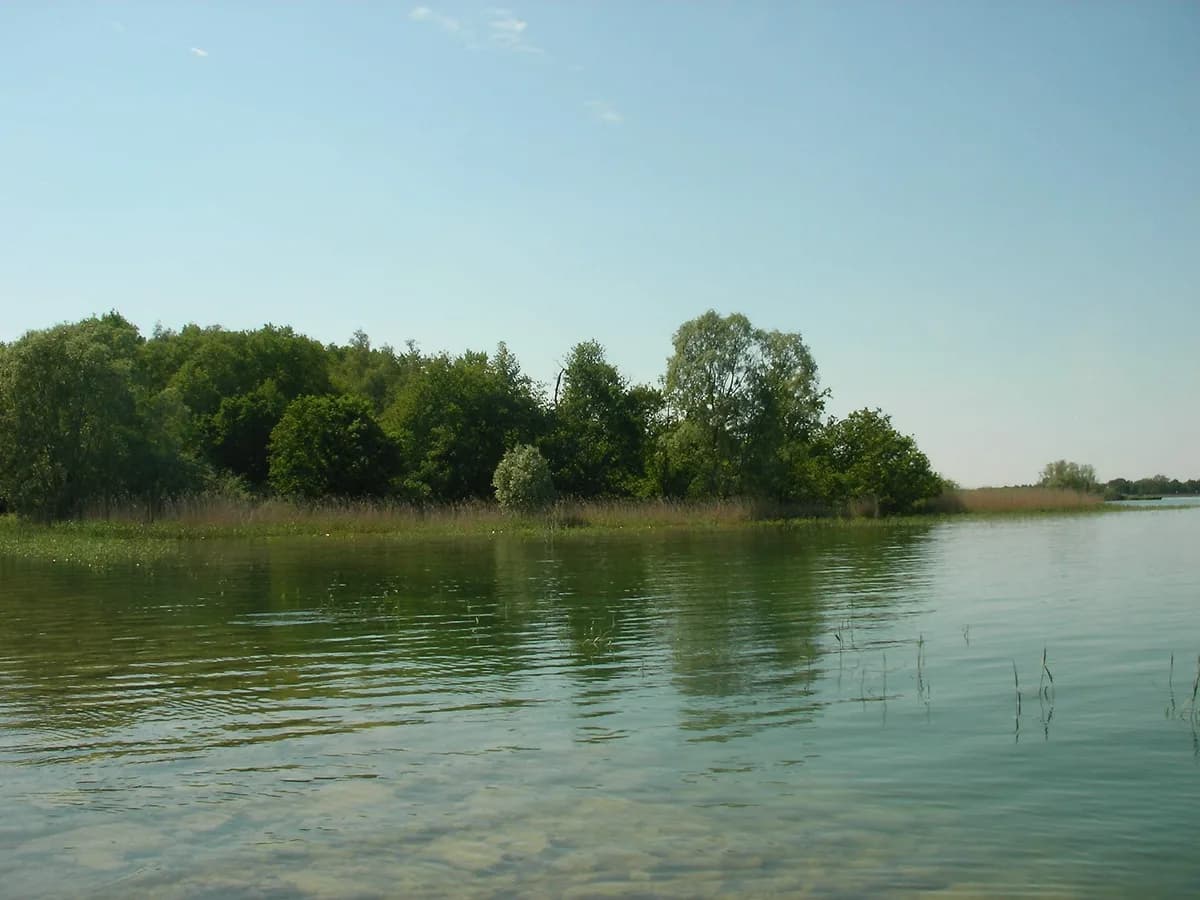
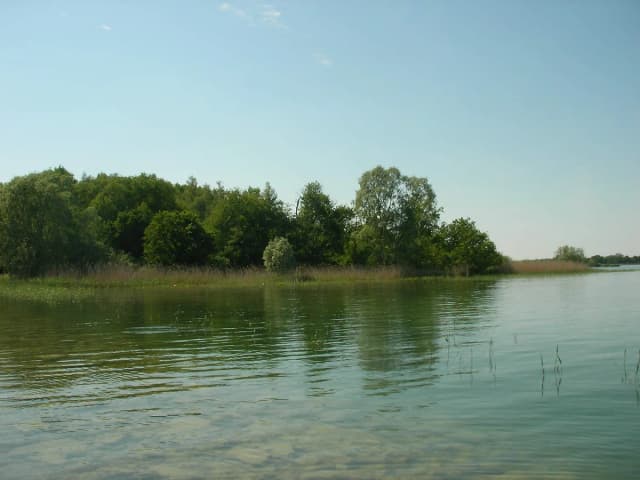
Lac du Der is the biggest artificial lake in France — four thousand eight hundred hectares of managed Champagne floodplain, built in 1974 to stop the Marne from periodically drowning Paris. The ecology it has developed in the half-century since is startlingly productive: vast shoals of roach and bream, which in turn feed pike that grow to sizes people in the Paris basin used to think belonged only in the Baltic. The fly fishery for pike here is now well established — there are guides, specialist tackle shops, and an entire seasonal calendar organised around the April opening. The lake is drawn down through winter for flood control and refills in spring, which creates rich feeding on the flooded margins exactly when the pike are most aggressive. Bring big flies, a fast-sinking line for the deep drop-offs, and a floater for the margin work. Water is coloured; pike are plentiful; do not expect trout.
- Public aappma day ticket
Spring pike — active and aggressive
Good wave on — drift country. Drift the windward shore. Wet flies on the wave.
Post-spawn pike are feeding hard in warming shallows. Fry are concentrated along margins and pike are following them. This is prime time for pike on the fly.
Conditions on the water
Some readings unavailable — check directly before fishing.
The brief
The plan
Spring pike on the fly — the best time of year. Pike are aggressive post-spawn and actively hunting in warming shallows. Fish reed margins, lily pad edges, and shallow bays. Mix sinking and floating lines. Surface takes possible on calm mornings. Wire trace mandatory — 30cm minimum.
If fish refuse on top, drop to a buzzer under an indicator at different depths.
Keep an eye on changing conditions — wind shifts and cloud breaks can trigger short feeding spells.
Good ripple suits both bank and boat. Bank: work inflows, dam walls, and points. Boat: broadside drift covering wind lanes.
What's on, when
Numbers are intensity 0 (none) to 3 (peak) — a guide, not a guarantee.
Top pattern + the box
Why today scores what it does
- Wind conditions (ripple) closely match what this water fishes best in.
Precipitation
Who this water suits
Lac du Der-Chantecoq, on the water
Field guide · contributor-editedWhat this water is
Lac du Der is the biggest artificial lake in France — four thousand eight hundred hectares of managed Champagne floodplain, built in 1974 to stop the Marne from periodically drowning Paris. The ecology it has developed in the half-century since is startlingly productive: vast shoals of roach and bream, which in turn feed pike that grow to sizes people in the Paris basin used to think belonged only in the Baltic. The fly fishery for pike here is now well established — there are guides, specialist tackle shops, and an entire seasonal calendar organised around the April opening. The lake is drawn down through winter for flood control and refills in spring, which creates rich feeding on the flooded margins exactly when the pike are most aggressive. Bring big flies, a fast-sinking line for the deep drop-offs, and a floater for the margin work. Water is coloured; pike are plentiful; do not expect trout.
- Reservoir
- Clay
How to get to the water
Where the rules change
- PikeLast Saturday of January → End of December
Licences, sorteo, the rules
- AAPPMA Marne / Haute-Marne
- Second category — pike closed Feb–April
- Drawdown through winter; lake refills in spring
- Several launch points and authorised fishing zones.
Lac du Der-Chantecoq
Lac du Der is the biggest artificial lake in France — four thousand eight hundred hectares of managed Champagne floodplain, built in 1974 to stop the Marne from periodically drowning Paris.
Spring pike — active and aggressive
Good wave on — drift country. Drift the windward shore. Wet flies on the wave.
Post-spawn pike are feeding hard in warming shallows. Fry are concentrated along margins and pike are following them. This is prime time for pike on the fly.
Some readings unavailable — check directly before fishing.
A good match for this venue — most conditions are close to what it fishes best in.
Spring pike on the fly — the best time of year. Pike are aggressive post-spawn and actively hunting in warming shallows. Fish reed margins, lily pad edges, and shallow bays. Mix sinking and floating lines. Surface takes possible on calm mornings. Wire trace mandatory — 30cm minimum.
If fish refuse on top, drop to a buzzer under an indicator at different depths.
Keep an eye on changing conditions — wind shifts and cloud breaks can trigger short feeding spells.
Good ripple suits both bank and boat. Bank: work inflows, dam walls, and points. Boat: broadside drift covering wind lanes.
- Wind conditions (ripple) closely match what this water fishes best in.
Numbers are intensity 0 (none) to 3 (peak) — a guide, not a guarantee.
- AAPPMA Marne / Haute-Marne
- Second category — pike closed Feb–April
- Drawdown through winter; lake refills in spring
- Several launch points and authorised fishing zones.
Lac du Der is the biggest artificial lake in France — four thousand eight hundred hectares of managed Champagne floodplain, built in 1974 to stop the Marne from periodically drowning Paris. The ecology it has developed in the half-century since is startlingly productive: vast shoals of roach and bream, which in turn feed pike that grow to sizes people in the Paris basin used to think belonged only in the Baltic. The fly fishery for pike here is now well established — there are guides, specialist tackle shops, and an entire seasonal calendar organised around the April opening. The lake is drawn down through winter for flood control and refills in spring, which creates rich feeding on the flooded margins exactly when the pike are most aggressive. Bring big flies, a fast-sinking line for the deep drop-offs, and a floater for the margin work. Water is coloured; pike are plentiful; do not expect trout.
- Reservoir
- Clay
- PikeLast Saturday of January → End of December
Lac du Der is the biggest artificial lake in France — four thousand eight hundred hectares of managed Champagne floodplain, built in 1974 to stop the Marne from periodically drowning Paris. The ecology it has developed in the half-century since is startlingly productive: vast shoals of roach and bream, which in turn feed pike that grow to sizes people in the Paris basin used to think belonged only in the Baltic. The fly fishery for pike here is now well established — there are guides, specialist tackle shops, and an entire seasonal calendar organised around the April opening. The lake is drawn down through winter for flood control and refills in spring, which creates rich feeding on the flooded margins exactly when the pike are most aggressive. Bring big flies, a fast-sinking line for the deep drop-offs, and a floater for the margin work. Water is coloured; pike are plentiful; do not expect trout.