
Spring Fed · Mixed · Eastern Sierra, US

Hot Creek

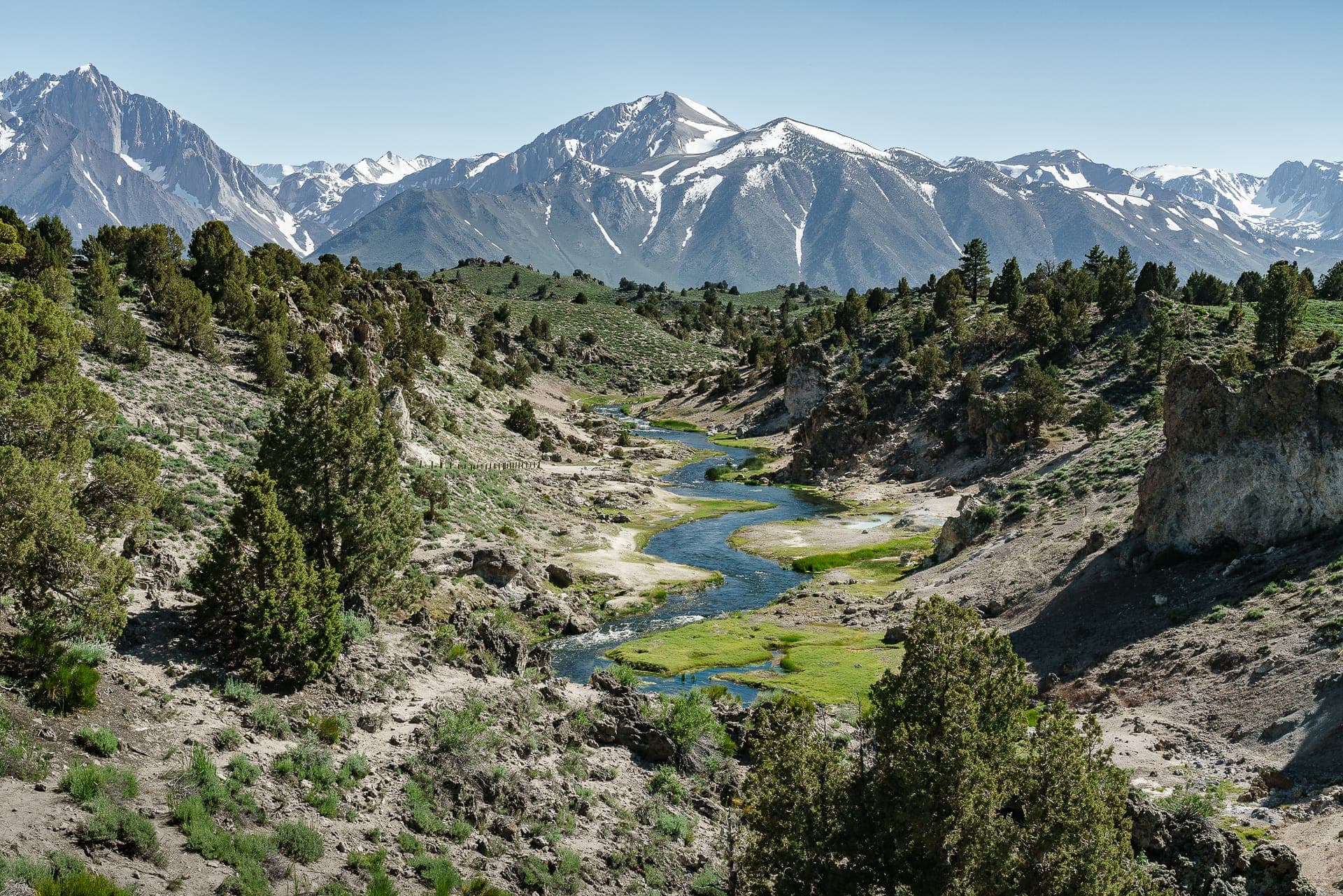
View from Brees Lookout over Hot Creek valley with Laurel Mountain behind, Eastern Sierra.

Hot Creek is a glassy spring-fed meadow stream below Mammoth, a Wild Trout water and one of the most technical pieces of dry-fly fishing in California — a place that will make a good caster feel ordinary.

Tomorrow · A proper day on the water
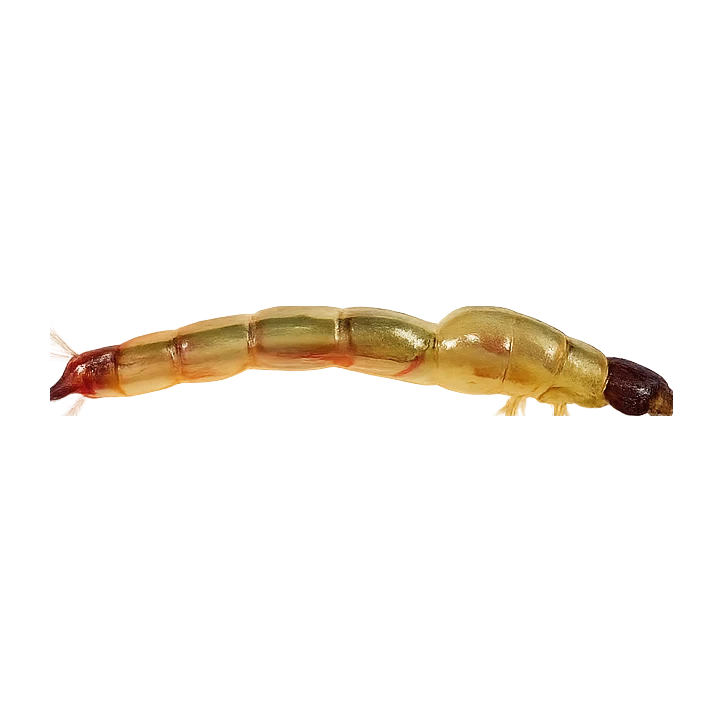
Gammarus Scud (Olive)
Forecast · Tomorrow
A proper day on the water
A proper day for it. Work the seams with an upstream nymph, switch to the dry when they show.
75% projected
Today's fly
Gammarus Scud (Olive)
Conditions on the water · Tomorrow
Estimate
Level
Dry recently
No gauge reading
Water temp7.8°C
ClarityClear
Weather13°C
WindN 9 km/h
Pressure1015 hPa
Rain · recent0.0 mm
Rain · ahead0.0 mm

No gauge on this water — readings are regional estimates from weather, not a live gauge.

Water temperature for Brown Trout
Cool — slow
8°C est.ideal 1016°C
0°14°28°
How to fish it · for Brown Trout
When
Nymphing can work through most of the day.
Where
Cover mixed depths.
Method
Start with tight-line nymphs and adjust if fish rise or drift higher.
Kit
9 ft #4 rod, floating line, 12 ft tapered leader to 4–5 lb fluoro tippet.
Why this works
Good — water clarity is working for you, but insect activity is the limiting factor today.
Likely species
Hatch timeline · tomorrowPeak at 10am

12pm(now) Black Midge

Stage: On emergersApproach: Emerger or dryActivity: 69%
Also:Western Blue-Winged Olive55%
Peak emergence window4 food groups active

Peak activity at 10am — Black Midge (Black Midge, Peak emergence window)

Sub-surface · on the nymphunder the surface

Hatch predictions

Top nymph shown — see all 2 guilds with Pro.

Start free trial

14-day free trial. Cancel anytime.

Beyond the hatch · worth watchingambient prey(1)

Hatch predictions

Top prey shown — see all 3 with Pro.

Start free trial

14-day free trial. Cancel anytime.

Evidence
Records-basedModerate confidence

Based on species-occurrence records, not local invertebrate surveys.

Through the year
0–3 scale · September highlighted
J
F
M
A
M
J
J
A
S
O
N
D
Trout seasonSeason
1
2
2
2
2
2
2
2
2
2
2
1
Western Blue-Winged OliveHatch
2
3
3
3
3
3
3
3
2
Pale Morning DunHatch
2
3
3
2
TricoHatch
2
3
2
Freshwater ShrimpHatch
2
3
3
3
3
3
3
3
3
3
3
2

Numbers are intensity 0 (none) to 3 (peak) — a guide, not a guarantee.

Ranked for today
Brown Trout fly box
Permits & access
Permit required — see local rules.
  • Year-round catch-and-release, barbless artificial only on the interpretive Wild Trout reach — verify exact boundaries and current rules against CDFW
  • THERMAL CAUTION: geothermal influence makes the temperature picture non-obvious; be conservative on summer welfare
  • Water temperature here should be treated as estimated unless a live sensor is confirmed.
What's coming
Plan ahead
5-day outlook
Fishing better nearby · 5
Gallery · 2
  1. View from Brees Lookout over Hot Creek valley with Laurel Mountain behind, Eastern Sierra.
    Hot Creek and Laurel Mountain
  2. Terrain map of the venue
    Terrain map
About this water

Hot Creek is a glassy spring-fed meadow stream below Mammoth, a Wild Trout water and one of the most technical pieces of dry-fly fishing in California — a place that will make a good caster feel ordinary. The wild browns and rainbows sit in clear, weed-lined runs and have a PhD in tippet diameter. It runs cold and constant from its springs, but there's geothermal water in the system too, so the thermal picture isn't the simple cold-tailwater story you'd assume — fish it in the cool of the morning in high summer and let it rest in the heat. Strictly catch-and-release on the famous interpretive reach. Small flies, long fine leaders, downstream presentations, and a sense of humour.

Under the surface

Hot Creek is a small spring creek that punches improbably above its weight — a short, clear, weed-rich meander through a high sage meadow under the Eastern Sierra near Mammoth, fed by cold springs and warmed, downstream, by the geothermal water that gives it its name and eventually boils up in a gorge of hot springs. The public interpretive section is the famous bit: a couple of hundred yards of glassy, gin-clear spring creek packed with wild browns and rainbows that see every angler who pulls off the highway and behave accordingly. The flow is constant off the volcanic aquifer; the bed is silt, gravel and rooted weed; the surface gives nothing away. Wading is not allowed on the interpretive water — you fish from the bank, on your knees, with the lightest tippet and the smallest flies. It is tiny, crowded, and one of the best technical dry-fly tests in the West.

Wading: No wading; bank only, total exposure

  • Mixed
  • Unconfined
  • Spring creek
  • Meandering
The full read · show the working · for Brown Trout · confidence 75%
How the 61 is built — score × weight = contribution
Temperature57 × 28%16.0
Flow60 × 22%13.2
Clarity95 × 18%17.1
Feeding Time45 × 13%5.9
Pressure80 × 7%5.6
Insect activity31 × 12%3.7
Conditions total= 62
Can you trust it?
Water temperatureair-to-water estimateestimated
Level / flowon-river gaugeobserved
Prey activitymodelled from regional profilemodelled
What would change the calculation
Warmer water — toward the 10–16 °C ideal band — would lift the temperature score.
The dawn and dusk windows score higher than the midday lull.
Directions
Seasons & zones
  • Trout 1 January31 December
Related guides
Booking & contacts