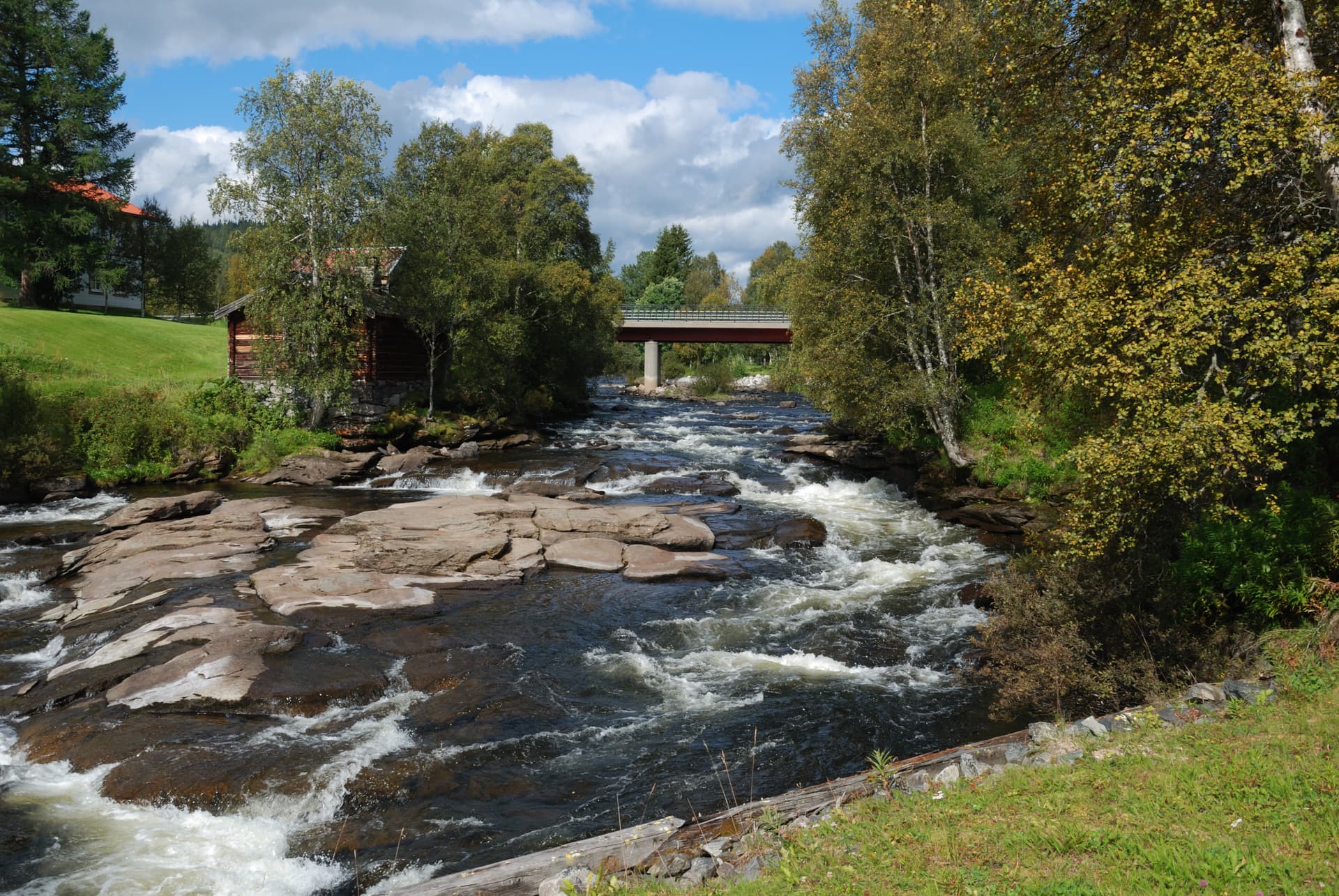


The Funäsfjällen area in west Härjedalen is mountain country — high fells, snowmelt streams, and a scatter of lakes and rivers that hold brown trout, Arctic char, and grayling at altitude. The char live in the coldest water; the trout fish better lower down where the rivers slow enough for insects to hatch properly in July and August. It's the kind of terrain that rewards walking rather than driving, because the best water is usually away from the obvious access points. Long summer evenings, fell landscape, fish that aren't spoiled by pressure.
A patient day, if you fancy it
Glassy and bright — hard work without a breeze. A flat lough is a quiet lough — wait for the breeze.
Conditions on the water
Some readings unavailable — check directly before fishing.
The brief
The plan
With limited drift, anchor or fish static from sheltered positions. Work a bushy searching pattern on the bob and drop a contrasting nymph on the point. In the calm, a single dry fly or a slowly-fished nymph tends to out-fish an active retrieve.
If the main plan is not working, switch to a smaller, more imitative pattern fished slower and deeper. A change of drift angle can also make a difference.
Keep an eye on changing conditions — wind shifts and cloud breaks can trigger short feeding spells.
Flat calm suits bank fishing near features — points, weed beds, and inflows where fish patrol.
What's on, when
Numbers are intensity 0 (none) to 3 (peak) — a guide, not a guarantee.
Top pattern + the box
Why today scores what it does
- late spring conditions with overcast skies and calm wind.
Precipitation
Who this water suits
Funäsfjällen Fiskepasset, on the water
Field guide · contributor-editedWhat this water is
The Funäsfjällen area in west Härjedalen is mountain country — high fells, snowmelt streams, and a scatter of lakes and rivers that hold brown trout, Arctic char, and grayling at altitude. The char live in the coldest water; the trout fish better lower down where the rivers slow enough for insects to hatch properly in July and August. It's the kind of terrain that rewards walking rather than driving, because the best water is usually away from the obvious access points. Long summer evenings, fell landscape, fish that aren't spoiled by pressure.
- Granite
How to get to the water
Where the rules change
- Trout1 June → 31 August
- Charvaries_by_permit → varies_by_permit
Licences, sorteo, the rules
- Mountain permit system with integrated iFiske access.
Funäsfjällen Fiskepasset
The Funäsfjällen area in west Härjedalen is mountain country — high fells, snowmelt streams, and a scatter of lakes and rivers that hold brown trout, Arctic char, and grayling at altitude.
A patient day, if you fancy it
Glassy and bright — hard work without a breeze. A flat lough is a quiet lough — wait for the breeze.
Some readings unavailable — check directly before fishing.
A reasonable day here, though temperature isn't quite in the sweet spot.
With limited drift, anchor or fish static from sheltered positions. Work a bushy searching pattern on the bob and drop a contrasting nymph on the point. In the calm, a single dry fly or a slowly-fished nymph tends to out-fish an active retrieve.
If the main plan is not working, switch to a smaller, more imitative pattern fished slower and deeper. A change of drift angle can also make a difference.
Keep an eye on changing conditions — wind shifts and cloud breaks can trigger short feeding spells.
Flat calm suits bank fishing near features — points, weed beds, and inflows where fish patrol.
- late spring conditions with overcast skies and calm wind.
Numbers are intensity 0 (none) to 3 (peak) — a guide, not a guarantee.
- Mountain permit system with integrated iFiske access.
The Funäsfjällen area in west Härjedalen is mountain country — high fells, snowmelt streams, and a scatter of lakes and rivers that hold brown trout, Arctic char, and grayling at altitude. The char live in the coldest water; the trout fish better lower down where the rivers slow enough for insects to hatch properly in July and August. It's the kind of terrain that rewards walking rather than driving, because the best water is usually away from the obvious access points. Long summer evenings, fell landscape, fish that aren't spoiled by pressure.
- Granite
- Trout1 June → 31 August
- Charvaries_by_permit → varies_by_permit
The Funäsfjällen area in west Härjedalen is mountain country — high fells, snowmelt streams, and a scatter of lakes and rivers that hold brown trout, Arctic char, and grayling at altitude. The char live in the coldest water; the trout fish better lower down where the rivers slow enough for insects to hatch properly in July and August. It's the kind of terrain that rewards walking rather than driving, because the best water is usually away from the obvious access points. Long summer evenings, fell landscape, fish that aren't spoiled by pressure.